
Choose your ideology wisely
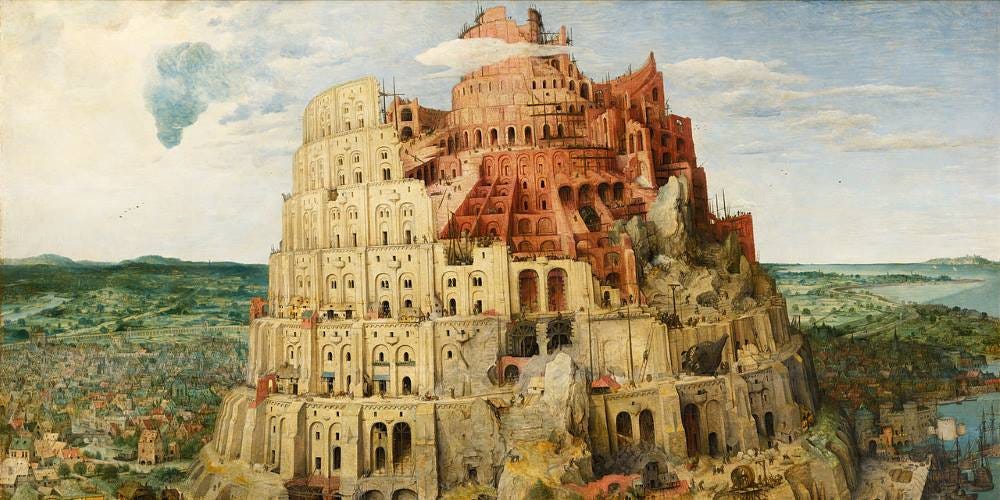
The acquisition of language has been a mystery to linguists as no direct empirical evidence has yet been discovered. Language supersedes all primitive forms of oral communication as it distills thoughts and ideas in the most effective manner. Collected knowledge has been historically dispended down through generations in the form of stories, analogies, tales and fables. This rich oral tradition, its oldest embodiment is preserved in writing of The Epic of Gilgamesh a story of a Sumerian King of Mesopotamia - the first civilization formed in 4000 B.C. Once language could be recorded in writing, the diffusion of ideas was perfected. Writing facilitated a collection of ideas to be converted into a system which could be disseminated, practiced and enforced by the members of that particular society.
This system is known as an ideology — a collection of ideas. In order to perpetuate an ideology, the followers have to believe in its tenets. For adoption purposes, the believers would later embed their ideology into laws. The law, in turn, would carry a penalty for anyone who would oppose or desecrate the ideology. Laws have become the cornerstone of modern society because it allows believers to control society. Laws also keep the ideology from evolving into better versions.
Throughout human history, ideologies have been instrumental in evolving and reforming the social, economic and political fabric of societies. In fact, it can be said that every major social movement was reformed and improved upon an existing idea revered by its followers. Slowly the new idea, if worthy, would gain traction and attract a new loyal and ardent following. The old ideology would slowly transmute into a newer version or would be replaced, either peacefully or violently. This has been a rinse-and-repeat cycle historically for all major movements.
However, the problem with ideology is that if it does not evolve with time, it becomes detrimental to human progress. The impediment to the ineveitable evolution of an ideology is law. Once, an ideology becomes law which governs human behaviour; the law extols stiff penalties from anyone who abrogates it. This cost to the inhabitants, dissuades them from improving the ideology. The cost can be justified via natural human or providential law. Ideologies, especially divinely sanctioned, extoll the harshest penalties from its followers. However, an ideology can not retain its influence on society for eternity. Historically, all previous ideologies have been replaced by newer ones; this much is inevitable. The litmus test of a devolving ideology is the inability to criticise it publicy. If we cannot critique an ideology, it can never be inherently moral. Any ideology immune from critque is essentially dogma.
Since birth, we are conditioned by society to focus on the benefits of the prevailing ideology and dispel any logical errors. Most ideologies ostracize and marginalize any dissidents of the said ideology. Violence is either encouraged or tolerated by the majority of its followers. As a specie we need to stop idealizing, venerating and defining ourselves by our ideologies. Our moral responsibility is to constantly refine, improve and evolve our beliefs. If an ideology becomes dogmatic, its downside can be catastrophic and may even wipe out our species. Evolution is the law of nature, and what does not evolve, dies or is simply replaced.